© Bronzewing Farm 2011-2026

What's in a name? The property has been called 'Bronzewing Farm' for as long as our
records are able to show. The 'Bronzewing' in question is the brush bronzewing pigeon
(Phaps elegans) which is often heard calling from the bush, or perhaps the brush,
throughout the day. However, the bronzewing is only one of many birds, other animals,
and plants found on the property. Fifty species of bird have so far been identified including
Richard's Pippits and Brown Quail which occupy the pastures, and swamp harriers and
wedge-tailed eagles which dominate the sky.
Five species of frog, Two species of lizard and a few copperhead snakes are commonly
encountered (see our video of a copperhead snake being rescued from the bird-netting
covering the Mountain Peppers in 2017). Platypus are found each year swimming in the
farm dams (see our video from 2018). Bandicoots live in all the long grass and sedge
areas that have been fenced to exclude the cattle. These areas are fenced with plain wire
electric fencing which cattle will not attempt to pass through, but allows full movement in
and out for smaller native animals. Pademelons and Bennett's Wallabies are common in
the bush around the farm but we are trying to limit their visitation rights.
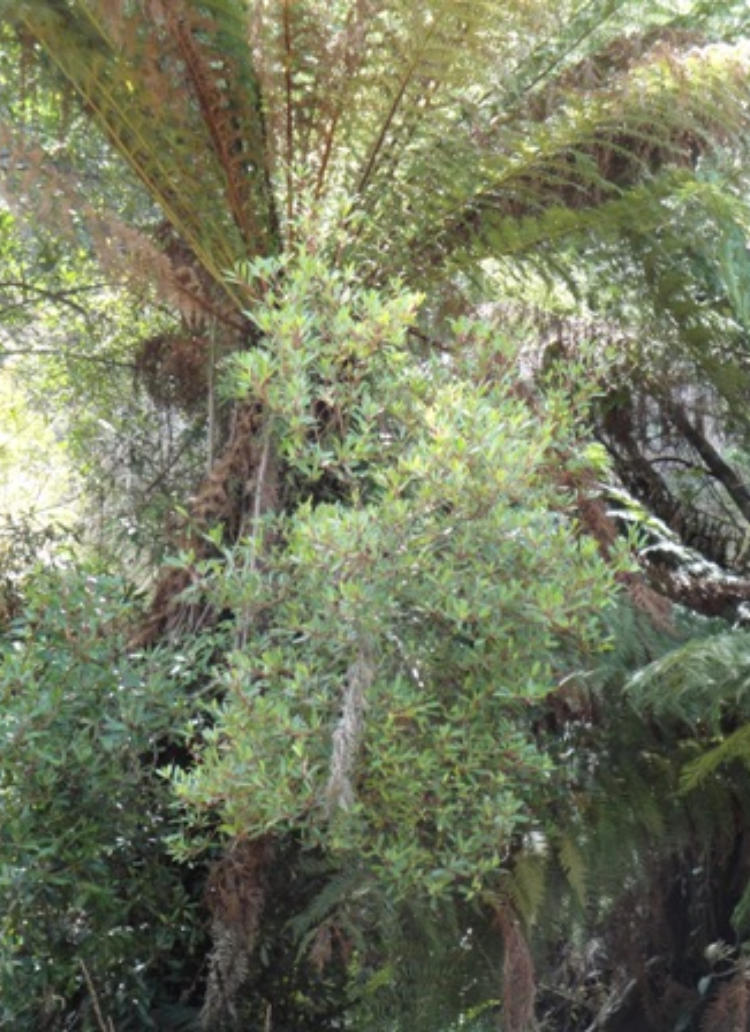
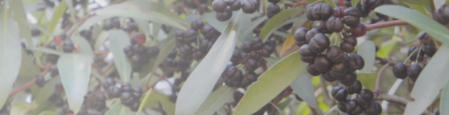
Nature and agriculture seem to fit seamlessly together on Bronzewing Farm. The photo
below is of a Tasmanian Mountain Pepper bush (Tasmannia lanceolata) growing out of the
side of one of the giant Tree Ferns (Dicksonia antarctica) growing in the farm's gullies. We
also have ~70 year-old Eucalyptus viminalis gum trees growing in our fenced-off ‘reserve’
area of the farm - you can see the video here.
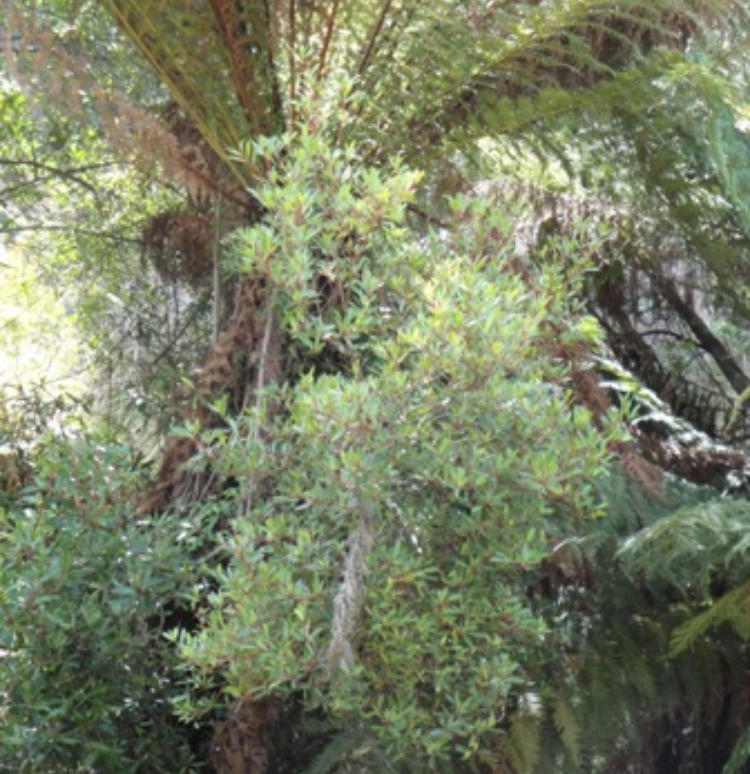
Tasmanian Mountain Pepper bush growing out the side of a Tree Fern
(click image to enlarge)



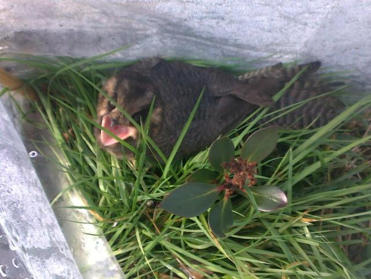
Another really neat finding was that of the Australian Owlet Nightjar
(Aegotheles cristatus). The bird in the picture below must have been out
feeding on insects and flown into the plastic sleave protectors around the new
mountain pepper trees in 2011, and was then unable to fly out. I had never
seen a Nightjar before and first thought it must have been a baby bird, but
after checking to make sure it's wings were OK, I held it up high on my hands
and it flew off strongly to the bush.
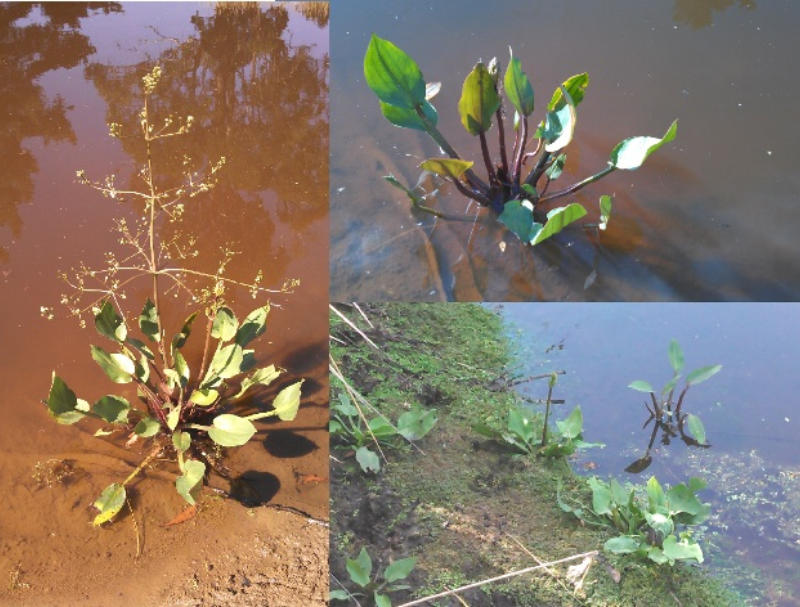
In 2013 we discovered 12 of the "rare" starfruit plant in one of our farm dams, and the plants
have been growing there since. The Tasmanian government website
(www.threatenedspecieslink.tas.gov.au) lists the plant as rare because it is only known from
three locations. The nearest of these locations to our farm is 30 km away in the Launceston
area. We had several of the farm's dams dredged of decades worth of silt in the winter of 2012
and it is likely that seeds of the plant were uncovered in the process.
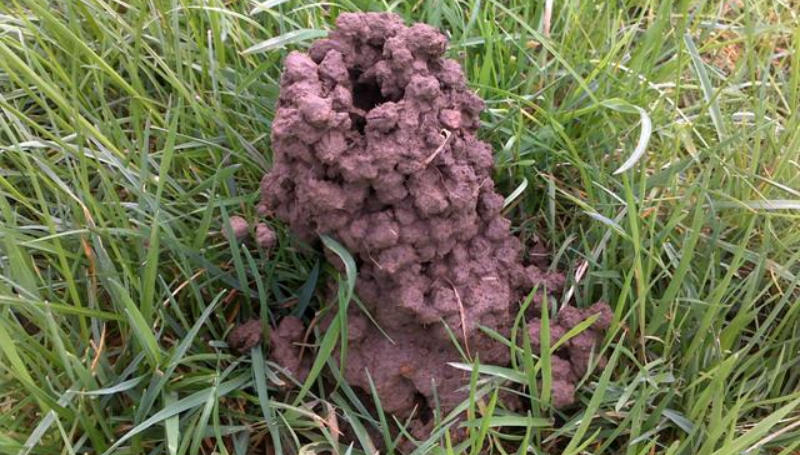
For more than 12 years we have seen the
'chimneys' of Tasmanian Burrowing Crayfish (see
photo below). Hopefully it is the Mt. Arthur
Burrowing Crayfish (Engaeus orramakunna), given
we are at the foot of Mt. Arthur. E. orramakunna is a
'threatened species' because of its' limited
distribution. A brochure on the genus is available
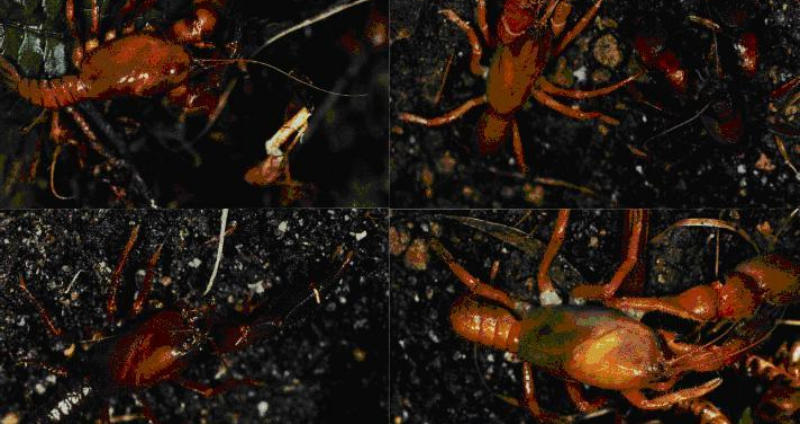
here Burrowing crayfish brochure. The photos of the
crayfish below are from a study on the distribution
and abundance of the species by Doran & Richards
1996.

















© Bronzewing Farm 2011-2026








What's in a name? The property has been called 'Bronzewing
Farm' for as long as our records are able to show. The
'Bronzewing' in question is the brush bronzewing pigeon
(Phaps elegans) which is often heard calling from the bush, or
perhaps the brush, throughout the day. However, the
bronzewing is only one of many birds, other animals, and
plants found on the property. Fifty species of bird have so far
been identified including Richard's Pippits and Brown Quail
which occupy the pastures, and swamp harriers and wedge-
tailed eagles which dominate the sky.
Five species of frog, Two species of lizard and a few
copperhead snakes are commonly encountered (see our video
of a copperhead snake being rescued from the bird-netting
covering the Mountain Peppers in 2017). Platypus are found
each year swimming in the farm dams (see our video from
2018). Bandicoots live in all the long grass and sedge areas
that have been fenced to exclude the cattle. These areas are
fenced with plain wire electric fencing which cattle will not
attempt to pass through, but allows full movement in and out
for smaller native animals. Pademelons and Bennett's
Wallabies are common in the bush around the farm but we are
trying to limit their visitation rights.
Nature and agriculture seem to fit seamlessly together on
Bronzewing Farm. The photo below is of a Tasmanian
Mountain Pepper bush (Tasmannia lanceolata) growing out of
the side of one of the giant Tree Ferns (Dicksonia antarctica)
growing in the farm's gullies. We also have ~70 year-old
Eucalyptus viminalis gum trees growing in our fenced-off
‘reserve’ area of the farm - you can see the video here.
In 2013 we discovered 12 of the "rare" starfruit plant in
one of our farm dams, and the plants have been growing
there since. The Tasmanian government website
(www.threatenedspecieslink.tas.gov.au) lists the plant as
rare because it is only known from three locations. The
nearest of these locations to our farm is 30 km away in
the Launceston area. We had several of the farm's dams
dredged of decades worth of silt in the winter of 2012 and
it is likely that seeds of the plant were uncovered in the
process.

For more than 12 years we have seen the 'chimneys' of
Tasmanian Burrowing Crayfish (see photo below).
Hopefully it is the Mt. Arthur Burrowing Crayfish
(Engaeus orramakunna), given we are at the foot of Mt.
Arthur. E. orramakunna is a 'threatened species'
because of its' limited distribution. A brochure on the
genus is available here Burrowing crayfish brochure.
The photos of the crayfish below are from a study on the
distribution and abundance of the species by Doran &
Richards 1996.


Another really neat finding was that of the Australian
Owlet Nightjar (Aegotheles cristatus). The bird in the
picture below must have been out feeding on insects and
flown into the plastic sleave protectors around the new
mountain pepper trees in 2011, and was then unable to fly
out. I had never seen a Nightjar before and first thought it
must have been a baby bird, but after checking to make
sure it's wings were OK, I held it up high on my hands and
it flew off strongly to the bush.